“I'll just check one thing.” It feels free: a few seconds, then back to work. It isn't. The glance is the cheap part; the expensive part is everything that happens after you put the phone down.
We treat a quick check like a rounding error, too small to matter. But the cost of an interruption was never the interruption itself. It's the long, invisible climb back to where your mind was, and you pay it in full every single time, dozens of times a day.
It's never just the glance
Picture what actually happens. You're mid-thought. A notification arrives, or you simply feel the pull. You glance. Five seconds, maybe thirty. Then you set the phone down and try to pick up exactly where you left off.
Except you can't, not immediately. Your mind has to reload the context: the half-finished sentence, the line of reasoning, the place you were standing in the problem. That reload is slow, and while it runs you're operating at half capacity, re-reading the last paragraph, hunting for the thread you'd been holding a moment ago.
The 23-minute climb
The most-cited number in attention research comes from Gloria Mark, a professor at the University of California, Irvine who spent years following knowledge workers with stopwatches and observation logs. Her finding: after an interruption, it takes an average of 23 minutes and 15 seconds to return to the original task.
There's a twist that makes it worse. People rarely go straight back to what they were doing. On average there are about two intervening tasks in between: you check the phone, which reminds you to answer a message, which sends you to your email, so by the time you return, the cost has compounded. Mark's work also found that interrupted work gets done faster, but at a measurable price: higher stress, more frustration, and greater time pressure, all recorded on a validated workload scale.
Attention residue: why the last thing follows you
Even when you do come back, part of you doesn't. Sophie Leroy, a researcher then at the University of Minnesota, named this attention residue: when you switch from one task to another, a portion of your attention stays stuck on the first. The unfinished glance lingers in the background (what did that message say?), quietly taxing the work in front of you.
This is why a five-second check can dent the next twenty minutes even if you never consciously think about it again. You didn't close the loop; the loop is still open, drawing on the same limited pool of attention you need for everything else.
The notification costs you five seconds. Getting your focus back costs you twenty-three minutes.
Run the math nobody runs
Take the conservative version. Say only a fraction of your 205 daily checks land in the middle of something that mattered: a piece of work, a conversation, a moment of rest. Even a handful of full 23-minute climbs is most of a working morning, gone not to the phone but to the recovery from the phone.
That's the part the screen-time number on your phone never shows you. It counts the minutes the screen was lit. It can't count the focus that drained away in the dark afterward: the deep work that never started because the runway kept getting cleared.
The honest reframe
You don't have a willpower problem. You have an interruption problem. And interruptions aren't solved by trying harder in the moment they arrive (by then the cost is already being charged). They're solved by making the easy checks impossible to start.
Remove the checks, and the tax disappears
The leverage point isn't the climb back. It's preventing the fall in the first place. If the distracting apps simply aren't reachable, the glance never happens, the loop never opens, and there's no residue to carry.
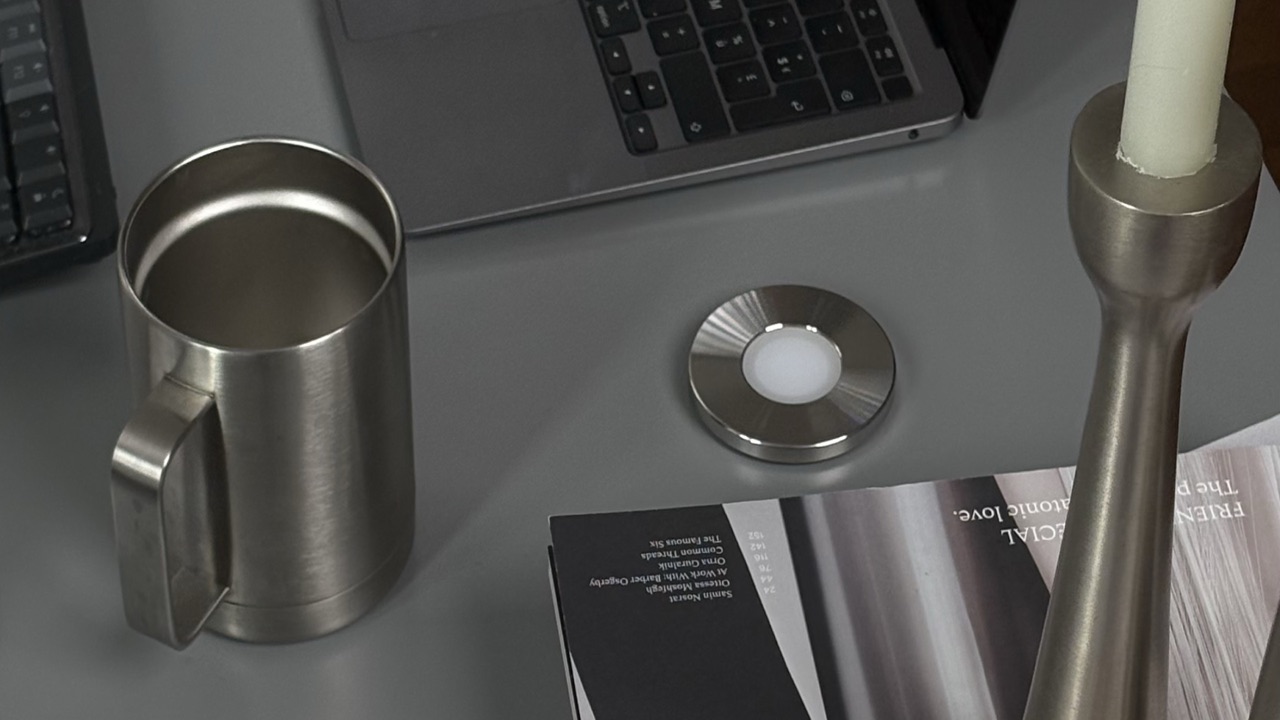
That's the entire idea behind Norma. You choose which apps disappear, then scan a steel disc with your iPhone to switch the block on. Because the off switch lives on the disc, not in a menu on the very phone you're trying to focus past, a weak moment has nothing to tap. The quick checks don't get shorter. They stop starting. Here's why moving the switch off the screen is the part that matters.
Questions, answered.
- How long does it take to refocus after an interruption?
- Research by Gloria Mark at the University of California, Irvine puts the average at 23 minutes and 15 seconds to return to the original task. People also rarely go straight back: on average there are about two intervening tasks in between, so the cost compounds before you have returned. The glance is short. The climb back is not.
- What is attention residue?
- It is the name Sophie Leroy, a researcher then at the University of Minnesota, gave to what happens when you switch tasks: a portion of your attention stays stuck on the first one. The unfinished thing lingers in the background and draws on the same limited pool of attention you need for the work in front of you. That is why a five-second check can dent the next twenty minutes even if you never consciously think about it again.
- How many times a day does the average person check their phone?
- Around 205 times a day, according to a 2024 Reviews.org survey. The raw number matters less than where those checks land: the ones that fall in the middle of a piece of work, a conversation or a moment of rest each start their own climb back. Even a handful of full 23-minute climbs is most of a working morning.
- Why is it so hard to get back to work after checking your phone?
- Because your mind has to reload the context you dropped: the half-finished sentence, the line of reasoning, the place you were standing in the problem. That reload is slow, and while it runs you are operating at half capacity, re-reading the last paragraph and hunting for the thread you were holding a moment ago. The interruption is the cheap part; the recovery is what actually costs you.
- How much productive time does task switching waste?
- The American Psychological Association puts the figure at up to 40% of productive time lost to task-switching. Gloria Mark's work adds a cost that is easier to miss: interrupted work does get finished faster, but at a measurable price in higher stress, more frustration and greater time pressure, all recorded on a validated workload scale. Speed on the surface, a bill underneath.
- How do I stop checking my phone while I'm working?
- Trying harder at the moment the pull arrives rarely works, because by then the cost is already being charged. What holds is making the easy checks impossible to start rather than shorter, so the glance never happens and there is no residue to carry. Norma works this way: you choose which apps disappear, then scan a steel disc with your iPhone to switch the block on, so the off switch is not on the phone you are trying to focus past.
Stop paying the refocus tax.
One scan puts the distracting apps away, so the quick checks never start.
Sources
- 1.Gloria Mark et al., UC Irvine · “The Cost of Interrupted Work: More Speed and Stress,” CHI 2008 (23 min 15 s; intervening tasks; higher stress)
- 2.Sophie Leroy · “Why is it so hard to do my work? The challenge of attention residue,” Organizational Behavior and Human Decision Processes, 2009
- 3.American Psychological Association · “Multitasking: Switching costs” (up to 40% of productive time)
- 4.Reviews.org · Cell Phone Usage Statistics (2024 survey: 205 checks/day)