You sit down with three chapters to get through. Forty minutes later you have read the same page twice and you know what everyone did last weekend. The problem is rarely discipline, and it is rarely the material. It is that the room you are studying in still has an exit in it.
Concentration is not a personality trait you either have or don’t. It is mostly a property of the setup: what is within reach, what is one tap away, and what happens at the moment the work stops being interesting. Here is what the research on interruptions actually shows, and a setup that survives an exam week.
Why a study session falls apart
The expensive part of a distraction is not the distraction. It is the return.
Gloria Mark and her colleagues at the University of California, Irvine shadowed 24 information workers minute by minute, more than 700 hours of observation in total. When interrupted work was picked up again the same day, it took an average of 25 minutes and 26 seconds to get back to it, and people had passed through an average of 2.3 other activities before they did. The glance costs seconds. The detour costs the rest of the hour.
A later study from the same group found something more uncomfortable than slowness. When people were interrupted, they did not take longer; they compensated by working faster and writing less. The cost turned up somewhere else entirely: more stress, more frustration, more time pressure, more effort. Applied to revision, that is the whole failure mode. You still finish the chapter. You just finish it in a state nobody would choose for learning something hard.
The part of you that stays behind
Sophie Leroy, now dean of the business school at the University of Washington Bothell, has spent seventeen years studying what happens when we switch focus. She named the mechanism attention residue: when you move from one task to another, part of your attention stays with the first one, particularly when you left it unfinished or know you will have to rush it later. Her own summary of the consequence is blunt — you have fewer cognitive resources for the task in front of you, and performance suffers most when that task is cognitively demanding. Studying is about as cognitively demanding as it gets. We looked at the full price of a quick check here.
Your phone doesn’t have to buzz to cost you
Most study advice assumes a phone is only a problem when it lights up. Researchers at the McCombs School of Business at the University of Texas at Austin tested that assumption directly. Adrian Ward and his co-authors ran experiments with nearly 800 people, who sat tests measuring available cognitive capacity: the brain’s ability to hold and process information at a given moment. Every phone was silenced. The only thing that varied was where it sat — face down on the desk, in a pocket or bag, or in another room.
The group whose phones were in another room scored best. Pocket or bag came next. On the desk was worst. It made no measurable difference whether the phone was face up or face down, or even whether it was switched on or off. Ward’s explanation is the useful part: the effort of requiring yourself not to think about something draws on the same limited pool you need for the work. He called it a brain drain.
Key takeaways
- The expensive part of a distraction is the return, not the glance.
- A silenced phone on the desk still costs you; face down changes nothing.
- Distance beats discipline: another room beat a pocket, which beat the desk.
- Decide the session’s one goal and its stopping point before you open the book.
- Block the two or three apps that actually cost you, and move the off switch off the phone.
What doesn’t work
- White-knuckling it. Resolve is a state, not a trait, and revision is exactly what drains it. A plan that depends on you being strong at hour three of a difficult chapter is a plan that fails at hour three of a difficult chapter.
- Turning the phone face down. It hides notifications. It does not restore the capacity the phone was quietly using, and the experiments above found no benefit from the gesture at all.
- App timers you can dismiss. A limit you can extend in one tap is not a limit, it is a prompt. And it arrives at the worst possible moment: the paragraph you don’t understand, the problem set that isn’t working. The material gets hard, the timer offers you a way out, and you take it.
- “Just find somewhere quiet.” Quiet solves noise. It does not solve reach, and reach is the problem.
- Open-ended sessions. With no finish line to work toward, the first difficult page becomes a reasonable place to stop.
A setup that holds
None of this is complicated. It is five decisions, all made before you start, while you are calm and none of them is being tested.
1. Put the phone in another room
Not face down, not in your bag. Another room, or at minimum another floor of the library. This single move is the highest-return thing on the list and it costs nothing.
2. Give the session one written goal
Not “study biology.” One sentence, specific enough that you will know whether you did it: the two enzyme pathways in chapter four, well enough to explain them without the book. A session with a defined target is much harder to drift out of, because drifting becomes visible.
3. Decide where you stop before you begin
A stopping point is not a reward, it is a boundary that makes the work finite. Fifty minutes, or the end of the problem set, whichever comes first. Knowing there is an end makes the difficult middle survivable, and it stops the evening from turning into four hours of low-grade guilt with a book open.
4. Block the two or three apps that actually cost you
Open your screen-time report and look at the top of the list. It is almost always two apps, occasionally three. Those are the ones to block. Trying to restrict forty apps is how the whole attempt collapses in a week; restricting the two that account for most of the damage is a change you can actually keep. The same logic that applies to cutting your screen time in general applies here, only with a deadline attached.
5. Remove the re-entry point
This is the step everything else depends on. A block that lives on the phone can be undone on the phone, by the same person, in the same weak moment, in about four seconds. The off switch has to be somewhere your tired self will not go: a different room, a locked drawer, a housemate, an object you deliberately left behind. That is the difference between a decision and a suggestion — and it is the same reason an evening of scrolling is so hard to interrupt from inside the phone.
The honest part
None of this makes hard material easy or turns a bad week into a good one. It only removes one specific failure: the one where you meant to study, and instead spent the evening recovering from interruptions you invited. That failure happens to be the most common one, and the most fixable.
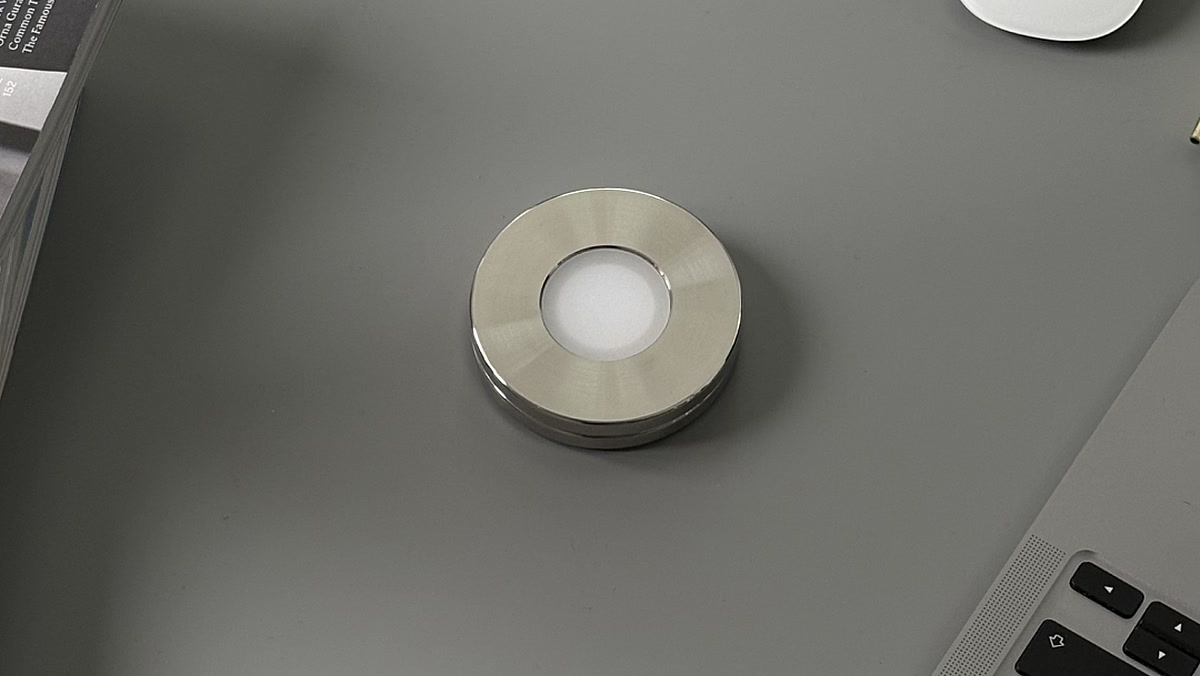
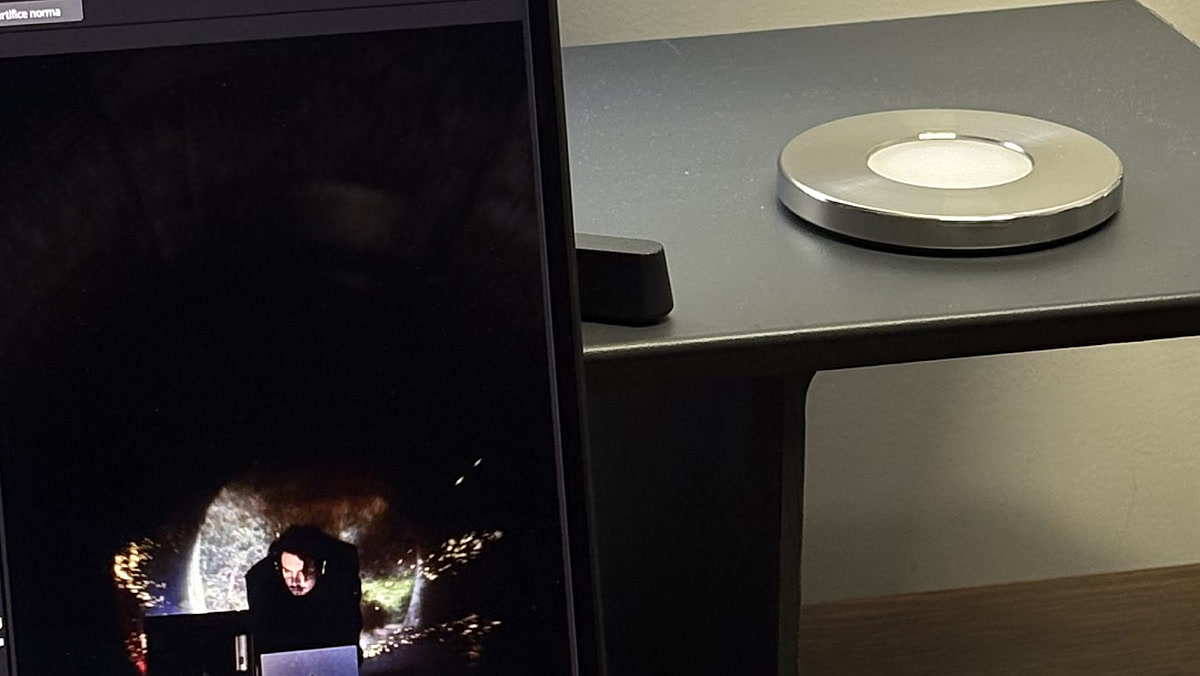
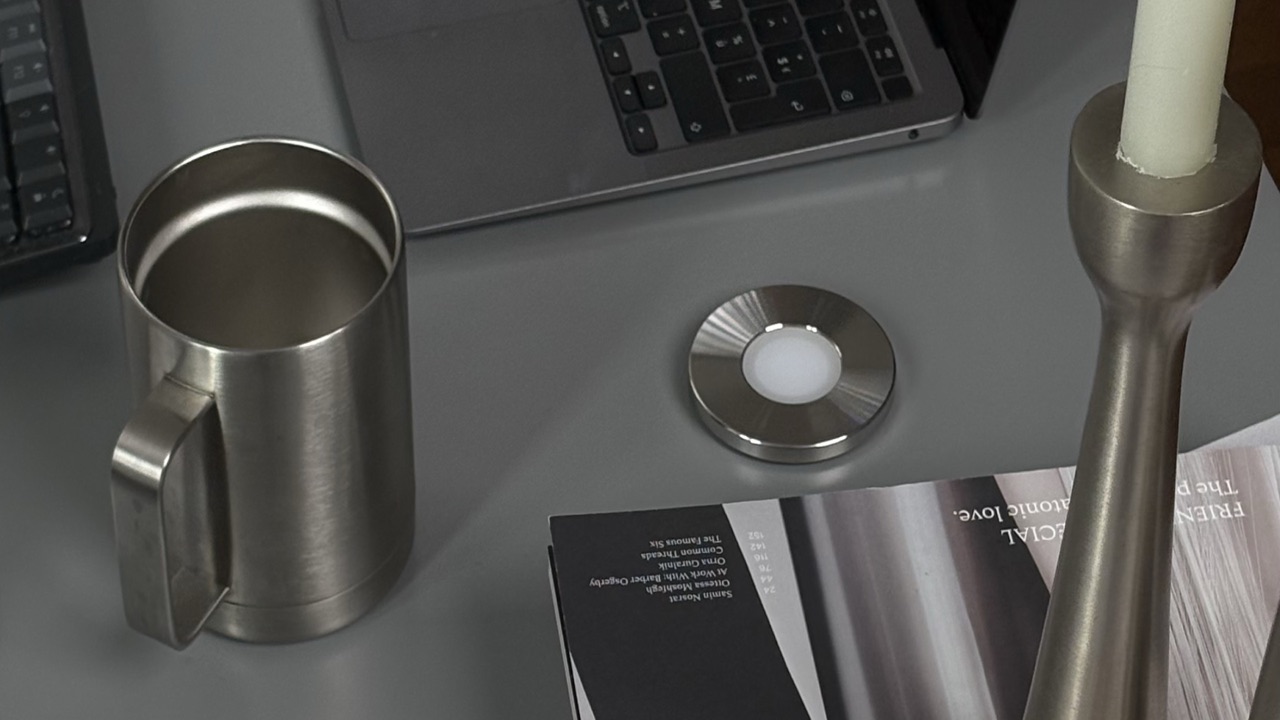
Which is why the last step is worth solving properly rather than with good intentions. Norma is one way to do it: a steel disc you scan with your iPhone to switch the block on, and scan again to switch it off. Because the off switch is the disc rather than a menu on the phone, leaving it in the kitchen is the entire enforcement mechanism, and there is nothing to negotiate with at eleven at night. It blocks distracting sites on a Mac too, which matters when the thing pulling you away is a browser tab rather than an app. One purchase, no subscription.
Study without the exit.
Scan the disc, and the apps that cost you disappear until you scan again.
Questions, answered.
- How do I focus on studying?
- Make the session small and specific, and make distraction physically inconvenient. One written goal, a defined stopping point, and the phone in another room will do more than any amount of resolve. Focus is mostly a property of the setup, not of the person.
- How can I study without getting distracted by my phone?
- Put it in another room. Research at UT Austin found that people whose phones were in a different room outperformed those who kept them in a pocket or bag, who in turn outperformed those with the phone on the desk — even with every phone silenced. If it has to stay near you, block the two or three apps that actually take your time, using something you cannot switch off from the phone itself.
- Why can’t I concentrate while studying?
- Usually because your attention is still partly somewhere else. Sophie Leroy calls this attention residue: when you switch tasks, part of your attention stays with the previous one, especially if it was left unfinished. Fewer resources are left for the work in front of you, and demanding work suffers most. Studying is demanding work.
- How do I stop procrastinating studying?
- Shrink the entry point and remove the exit. Commit to twenty-five minutes on one named thing rather than an open-ended evening, and take the escape route away before you begin, because you will not take it away at the moment you want it. Starting is the part that needs help, not finishing.
- Does putting your phone face down actually help?
- Not much. In the UT Austin experiments it made no measurable difference whether the phone lay face up or face down, or whether it was on or off. What mattered was distance. Face down keeps notifications out of sight; it does not keep the phone out of mind.
- What is the best way to study without distractions?
- One goal, one clear stopping point, the phone out of the room, and a block on your two or three worst apps that a tired version of you cannot undo in a tap. Everything else — the playlist, the app, the desk setup — is detail on top of those four.
Sources
- 1.The University of Texas at Austin · “The Mere Presence of Your Smartphone Reduces Brain Power, Study Shows” (Adrian Ward et al., McCombs School of Business)
- 2.Gloria Mark, Victor González, Justin Harris, UC Irvine · “No Task Left Behind? Examining the Nature of Fragmented Work,” CHI 2005 (25 min 26 s to resume; 2.3 intervening activities)
- 3.Gloria Mark, Daniela Gudith, Ulrich Klocke · “The Cost of Interrupted Work: More Speed and Stress,” CHI 2008
- 4.Sophie Leroy, University of Washington Bothell · “Attention Residue”